




Talking CAHPS With Rex Wallace Consulting
Top Four Takeaways for This Coming CAHPS Season
1. Retention as a Year-Round Priority
Retention was highlighted as a recurring theme because it directly influences CAHPS outcomes and overall performance. Recruiting new members requires significant investment, so keeping members satisfied and engaged delivers better returns. CAHPS provides insight into dissatisfaction early, often before disenrollment begins. If members consistently report frustration about communication gaps, access to care, or benefit clarity, those signals predict retention risks.
How to do it:
- Leverage predictive analytics to identify members most likely to leave, based on engagement data, claims, and interaction history. For example, patterns like missed preventive screenings, repeated service complaints, or low engagement with digital tools can all indicate risk.
- Deploy targeted interventions: use outreach like SMS reminders, educational nudges, or live agent calls designed to address specific concerns.
- Reinforce trust through consistency: send follow-ups after problem resolution, close the loop when members raise concerns, and make sure every touchpoint is clear and empathetic.
One key takeaway: retention strategies must run year-round. Every interaction either builds or erodes trust, and CAHPS results reflect the sum of those experiences.
2. Annual Enrollment Period as the Starting Line
AEP sets the tone for the member relationship. A smooth, supportive enrollment experience builds confidence and loyalty, while confusion during sign-up can sour perceptions for the rest of the year.
How to do it:
- Streamline enrollment with clear, simple communication across digital channels. SMS nudges, IVR prompts, and web portals should all guide members confidently through the process.
- Onboard immediately: after sign-up, send welcome communications that explain benefits, share digital tutorials, and prompt portal registration. This establishes trust and reduces anxiety about coverage.
- Proactive education: use video or text-based content to explain benefits in plain language, reducing confusion and minimizing avoidable calls to member services.
For example, plans using tailored digital outreach have driven significant increases in portal registration and medication adherence. These early wins during AEP set members up for a positive relationship with the plan, which carries into CAHPS survey responses months later.
3. Member Personas to Drive Personalization
Members are not a monolith, and this was a point underscored in detail during the discussion. Heidi Salerno, Rex Wallace Consulting Medicare Expert, emphasized how developing and applying member personas helps health plans move from generic communication toward experiences that feel personal and relevant. She explained that when plans group members into distinct personas, such as new enrollees, long-tenured members, or those managing complex conditions, it allows plans to anticipate needs and design communication that resonates. This process not only improves engagement but also gives plans a practical framework for prioritizing outreach and aligning resources where they will make the most impact.
How to do it:
- New members: provide step-by-step onboarding with multiple touchpoints, ensuring they feel supported as they learn to use their benefits.
- Long-tenured members: focus on reinforcing preventive care, medication adherence, and chronic condition management with reminders and educational nudges.
- At-risk or underserved populations: address language and digital access barriers with multilingual messaging, culturally relevant content, and conversational AI to improve reach.
mPulse has seen success with using behavioral science techniques and two-way SMS to adapt messaging to personas. For example, motivational nudges sent to members at key points in their care journey have led to measurable improvements in engagement and outcomes. Persona-driven outreach ensures members feel understood, which directly improves satisfaction reflected in CAHPS scores.
4. Executing CAHPS: Year-Round + Just-in-Time Engagement
 The most important shift is moving from viewing CAHPS as a once-a-year survey to embedding it into daily operations. The key is combining year-round engagement with just-in-time activation, powered by predictive analytics.
Orchestration & Just-in-Time Activation
Plans should design engagement journeys that run continuously but allow for nimble, targeted outreach when it matters most. That means:
- Sending steady educational and engagement content throughout the year.
- Triggering outreach during critical windows, like before CAHPS survey fielding or when predictive models flag disenrollment risk.
- Using multiple channels such as SMS, IVR, portals, and live calls, so members receive support in the ways they prefer.
For instance, if a predictive model identifies a member as likely to rate access or communication poorly, a plan can send tailored outreach to resolve concerns before the survey period. Similarly, members showing low engagement signals can receive nudges that encourage re-connection at just the right time.
Predictive Analytics → Actionable Segmentation
Predictive models make CAHPS strategy scalable and efficient. Instead of blasting all members with the same outreach, predictive analytics help plans:
- Identify high-impact subsets: narrow large eligible populations down to those most likely to influence CAHPS results.
- Target interventions where they will matter most, focusing resources on members whose experiences will shape survey responses.
- Continuously refine outreach using real-time engagement data — each click, response, or call informs who to target and how.
This approach balances efficiency with impact: members most at risk of dissatisfaction get prioritized attention, while the broader member base continues to receive year-round engagement. It prevents over-messaging and ensures that interventions land where they can make the biggest difference.
Where Health Plans Go From Here
CAHPS performance is not about last-minute fixes, it’s about embedding member experience into every interaction. Health plans that focus on retention, optimize AEP as the launchpad for engagement, personalize communication with member personas, and execute year-round with predictive and just-in-time outreach will see measurable results.
This approach moves beyond surface-level compliance and into real transformation. By treating CAHPS as both a survey and a strategy, plans not only improve scores but also strengthen loyalty, reduce disenrollment, and deliver better health outcomes for their members.
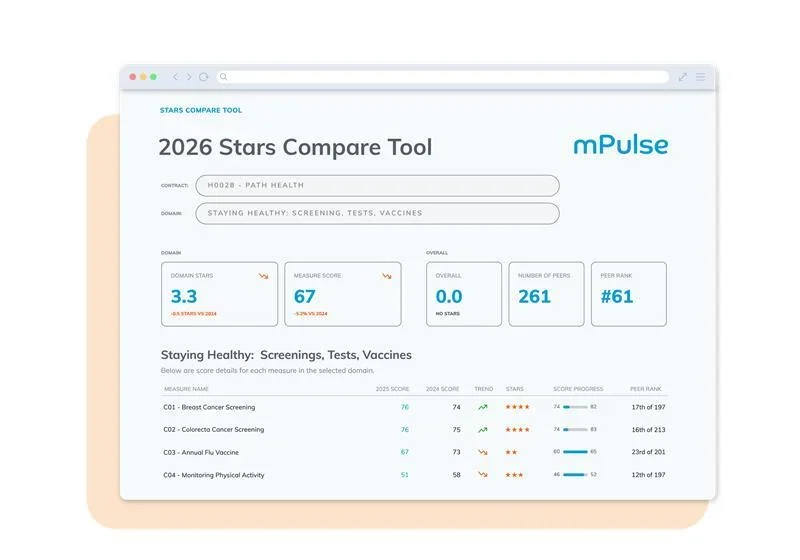
2026 Stars Compare Tool
Analyze your quality ratings and compare your performance against your peers.